
Ableism: Prejudice leading to discrimination against people because their disabilities
There have been countless articles, online posts and god knows what else to describe the all too common ableism behind some of the symbols, imagery and narrative around autism used in mainstream media and conversations. Most notoriously the puzzle piece which came from parents “puzzled” by autism and described their misunderstanding of autistic people. Many have also dehumanised autistic people by heavily implying that the “missing” puzzle piece represents something “lacking” in us that doesn’t make autistics fully human.
The puzzle piece was later adopted by the problematic autism “charity” Autism Speaks, which spreads hate about autistic people, with the most famous example of this being the TV advert comparing autism to illnesses such as cancer and diabetes…
It’s also why many autistic people push back against other initiatives that come from Autism Speaks, such as lighting up blue for autism awareness. Unfortunately many of these organisations have lots of funding and as a result have become the loudest voices over the last few decades when it comes to autism. People don’t need to research these ableist messages about autism, big money is used to put it right in front of their faces. The result is many take at face value what organisations like Autism Speaks put out there, as they wouldn’t have come across anything that challenges these messages unless they were specifically looking for it on certain corners of the internet.
Consequently, people will associate and promote these symbols related to autism without understanding the ableism beneath them. Well to be honest, some people understand it and still decide to spread ableist falsehoods about autism anyway. If you’re looking to learn the history behind this in more depth, I’d recommend reading the following.
- The Ableist History of the Puzzle Piece Symbol for Autism
- The History of the Puzzle Piece (a Controversial Symbol for Autism and Autistic People), ABA, Conversion Therapy, & Autism Speaks
Some have built whole identities around the ableist narratives that are popular, primarily those who are adjacent to autistic people rather than autistic people themselves. This is where things like cringey autism slogans on merch and puzzle piece tattoos come from. With some examples below.
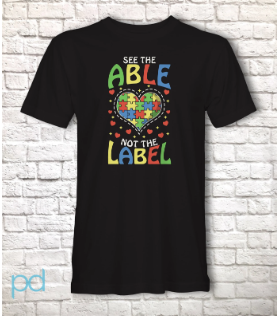
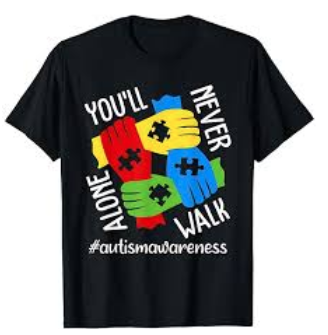
Right: T-shirt with the caption ‘I see the able not the label’ and a puzzle piece heart in the middle. Left: T shirt with the caption ‘You’ll never walk alone #autismawareness’ with four hands holding each other’s wrist. Each hand has a missing piece in it, shaped like a puzzle piece.
However, something that I felt was missing was a term to describe what many autistics have seen play out for years, and ‘Puzzle Piece Propaganda‘ came to mind. You may be asking why this term? So let me list my reasons for coining it.
- I hadn’t come across a term to describe the ableist messages against autistic people which shared a common theme and history.
- The puzzle piece as a symbol is what unites a lot of the ableists’ conversations (both intentional or unintentional) about autism.
- A lot of the messages put out there about autism into mainstream conversations were funded by large awareness “campaigns” that conveyed a very dehumanising view of autistic people which rarely (if ever) included working collaboratively with autistic people. Hence a form of propaganda.
Whether we like it or not, the messages that large organisations pay to put out there have a direct influence and often significant influence on how we view, treat and interact with people. The same is true with the ableist Puzzle Piece Propaganda and its role in how autistic people have been subjected to cruel and traumatic “treatments” to cure autism. When autism isn’t an illness and is part of human nature. However, some have likely felt they want a cure for their autism at some point in their life due to the lack of acceptance for autistic people in our society. The toxic propaganda put out there about autism has only fueled this and made autistic people’s quality of life so much worse. So it’s crucial we name it for what it is, Puzzle Piece Propaganda and we question the motives behind the organisations (and people) who push it onto us.
Although our voices on social media and online are growing in calling out what I now call Puzzle Piece Propaganda, there’s still a long way to go. Some organisations like Autism Speaks have attempted to rebrand (despite still having a puzzle piece in their logo), but they haven’t fundamentally changed. I’m Autistic, Now What? Covers on her youtube channel.
So it’s crucial we do not take organisations at face value who claim they have moved on or have tried to tone down their Puzzle Piece Propaganda.
If you enjoy my writing or would like to support my online advocacy work, I would be forever grateful if you could buy me a coffee (or tea in my case).
You can also support the blog by purchasing my book ‘Young Autistic and ADHD: Moving into adulthood when you’re multiply neurodivergent’.
 Sarah Boon
Leave a comment